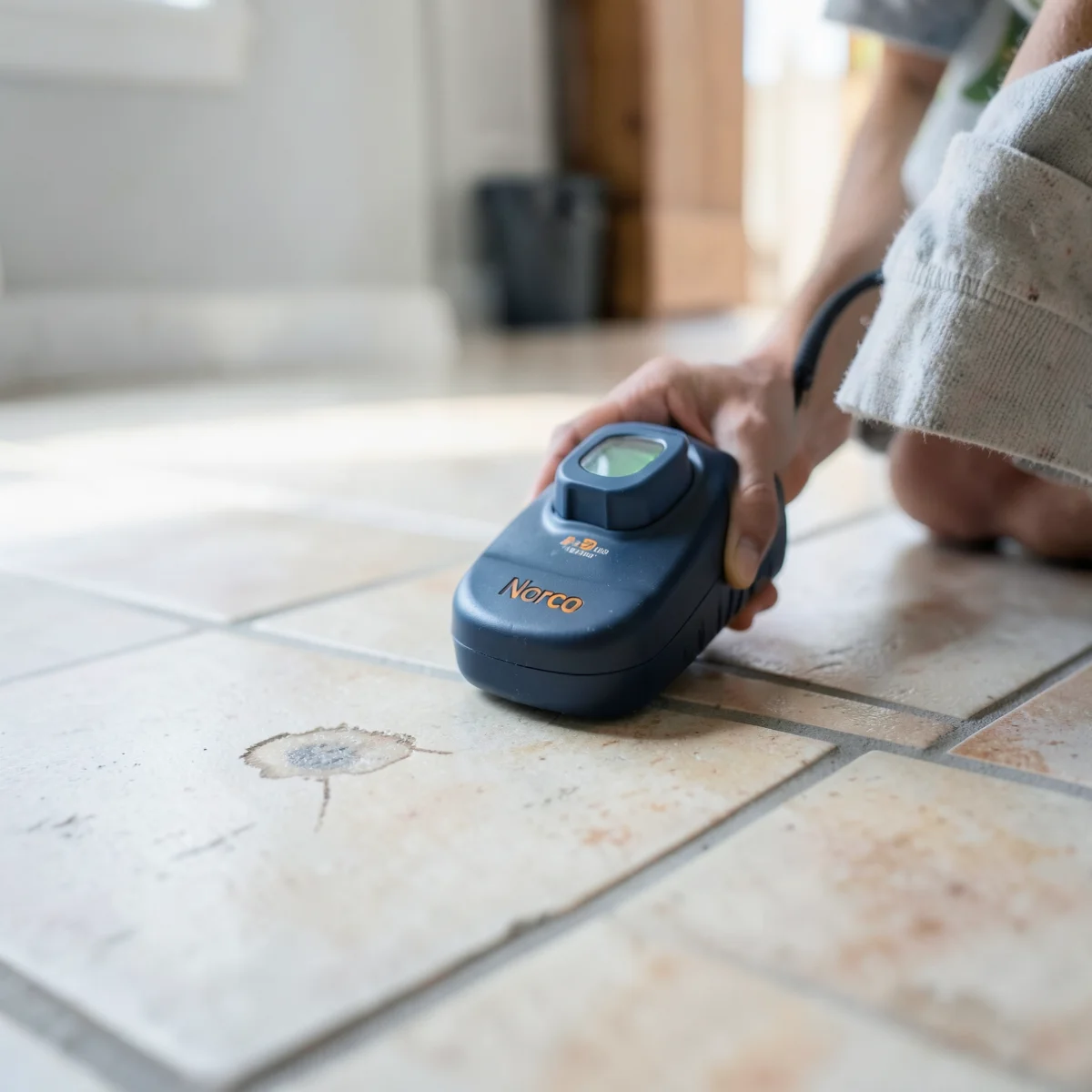
A slab leak is a leak in the water lines that run beneath your home's concrete foundation. It is one of the sneakiest plumbing problems there is, because the water has nowhere obvious to go — so it soaks into the slab, the flooring, and eventually the foundation, often for weeks before anyone notices.
The good news is that slab leaks announce themselves if you know what to listen and look for. Here are the warning signs, a simple test you can run yourself, and how the pros pinpoint a slab leak without jackhammering the whole floor.
Warning sign: a warm spot on the floor
A leak on the hot-water line under the slab warms the floor above it. If you notice an unexplained warm patch on a tile or vinyl floor — especially one that stays warm — it is a classic slab-leak indicator and worth investigating right away.
Warning sign: a sudden drop in water pressure
When water escapes under the slab, less of it reaches your fixtures, so pressure drops across the house. A noticeable, unexplained pressure loss is a common slab-leak symptom — and one people often blame on the city or the fixtures instead.
Warning sign: the sound of running water
If you hear water running when every fixture is off, water is moving somewhere it should not be. Under a slab, that sound can seem to come from the floor or a wall. It is one of the more reliable early clues.
Warning sign: a water heater that never rests
A slab leak on the hot side keeps pulling hot water, so the water heater runs far more than it should. If your unit seems to be heating constantly, a hidden hot-line leak could be the reason.
The meter test you can do yourself
Here is a simple check any homeowner can run. Turn off every water fixture and appliance in the house. Then find your water meter and watch the leak indicator (often a small dial or triangle) or note the reading.
Wait 15 to 30 minutes without using any water. If the indicator has moved or the reading has changed, water is escaping somewhere — and if you have ruled out running toilets and dripping faucets, a slab leak is a strong possibility. This is the single most useful diagnostic a homeowner can do, and it works for hidden leaks of all kinds.
Why slab leaks are common in this area
Two local factors make slab leaks more common around Norco. Hard water slowly pits and corrodes the copper lines under the slab, and the region's shifting clay and sandy-loam soils stress those lines as the ground moves with drought and moisture cycles. Together they are a recipe for under-slab pinhole leaks.
How professionals pinpoint and fix it
Once a slab leak is suspected, the goal is to find its exact location before touching any concrete. Plumbers use electronic acoustic equipment to hear the escaping water, along with pressure testing and thermal tools, to mark the spot precisely.
From there, the repair is often less invasive than people fear. In many cases the affected line can be rerouted overhead to bypass the slab entirely, avoiding concrete work. When a spot repair through the slab is the better choice, pinpointing the leak first keeps the opening small. For homes with repeat slab leaks, repiping above the slab solves the underlying problem for good.