A plumbing emergency has a way of arriving at the worst possible time — a supply line letting go at midnight, a main backing up on a holiday weekend with a houseful of guests. In those first few minutes, what you do matters more than almost anything the plumber does later.
This is a Norco homeowner's field guide to the first ten minutes of a plumbing emergency: how to stop the damage, what to check, and when to stop and call a professional. Save it, and ideally walk your household through it before you ever need it.
Step 1: Shut off the water
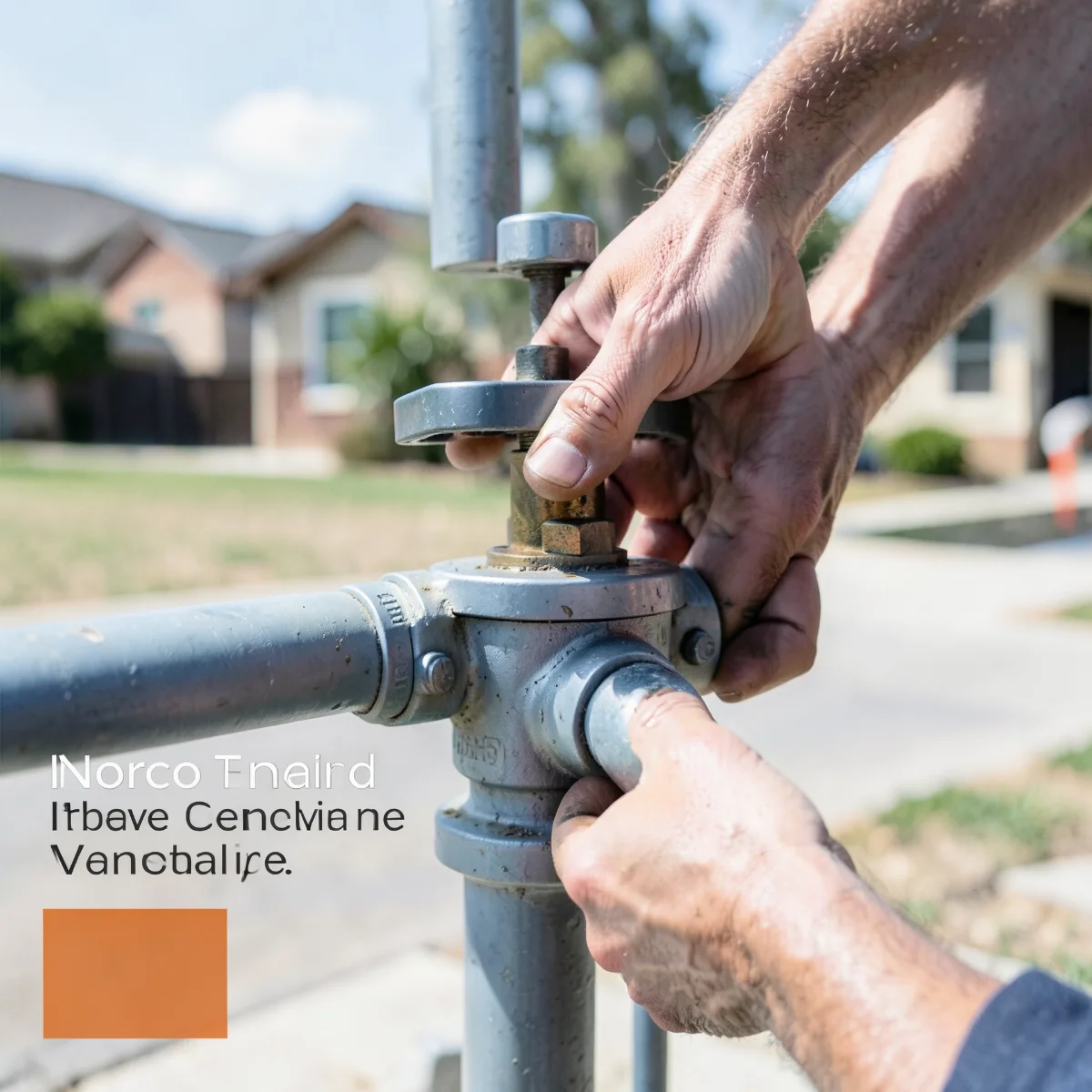
Almost every plumbing emergency gets better the moment the water stops. For a single fixture — an overflowing toilet or a leaking sink — turn the shut-off valve at the wall or under the fixture clockwise to close it.
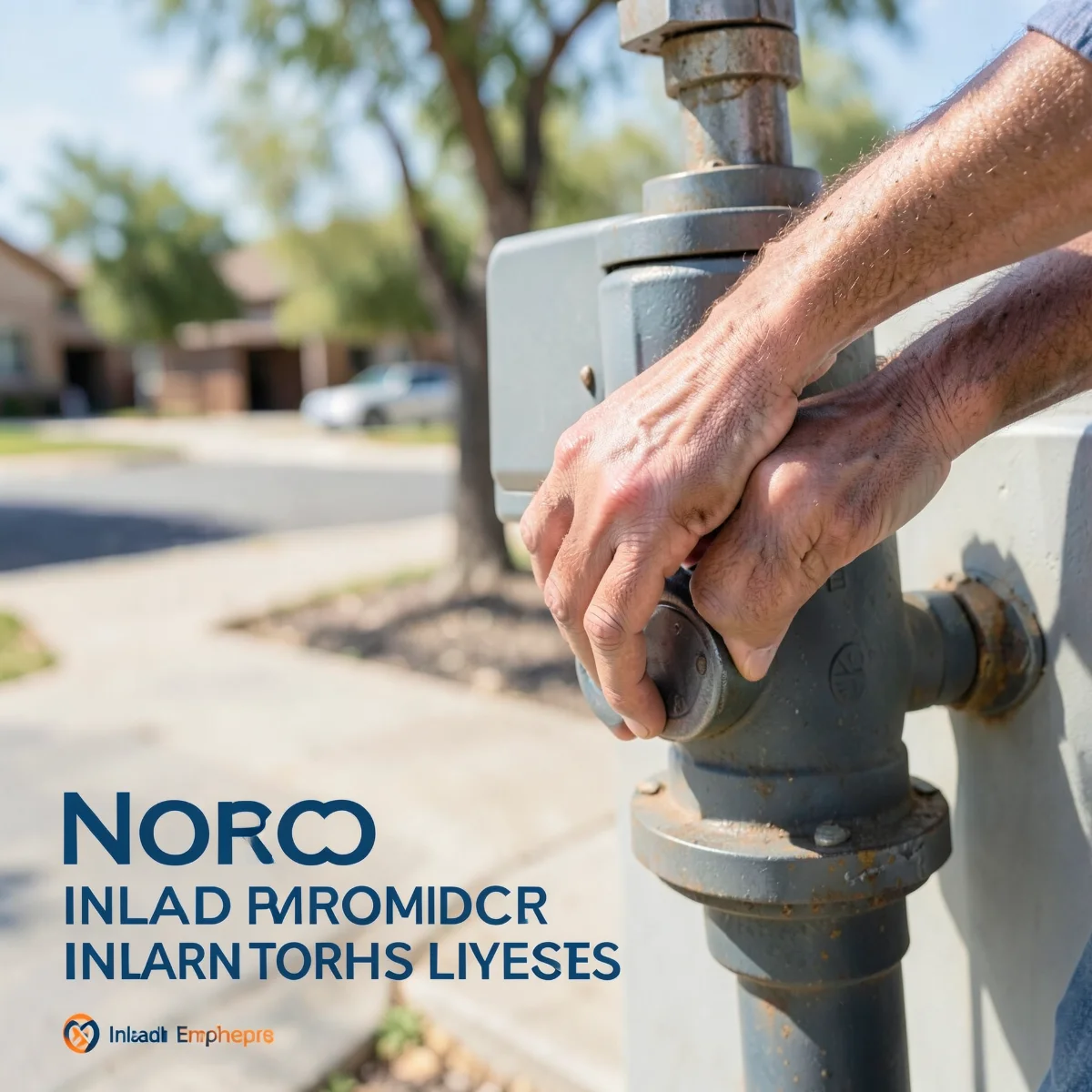
For anything bigger, go straight to the main shut-off valve. It is usually where the water line enters the house or near the meter at the street. Turn it fully clockwise. If you do not know where yours is, find it today, not during the flood — it is the single most useful thing you can know about your home's plumbing.
Step 2: Kill the water heater if needed
If the emergency involves hot water or you have shut off the main, switch off your water heater so it does not run dry and overheat. For a gas unit, turn the dial to pilot or off; for electric, flip the breaker. This protects the unit while the water is off.
Step 3: For a sewer backup, stop all water use
If sewage is coming up through the lowest drains, the problem is your main line, and every flush or running faucet makes it worse. Stop using all water immediately — no toilets, no sinks, no laundry. Keep people and pets away from the affected area, and call for help. Sewage is a health hazard, not a DIY cleanup.
Step 4: For a gas smell, leave first
If you smell gas (a rotten-egg odor), treat it as the most serious emergency on this list. Do not flip switches or use anything that could spark. Get everyone out of the building, and from a safe distance call your gas utility's emergency line first, then a licensed plumber. Gas line repair is never a wait-and-see situation.
Step 5: Contain and document
Once the water is off, contain what you can with towels and buckets, and move valuables and furniture away from the water. Then take photos and video of the damage before you clean up — your insurance adjuster will want them, and a sudden burst is often a covered claim while a slow long-term leak may not be.
What to leave to a professional
Stopping the water and containing the damage is your job. Finding the cause and making the repair is ours. Resist the urge to pour chemical cleaners down a backed-up drain or to over-tighten a leaking fitting — both often make things worse.
This is also where local matters. A real local dispatcher can talk you through these steps on the phone and get a licensed plumber to you fast, instead of an out-of-state answering service taking a message while your floor soaks.
Be ready before it happens
- Locate your main water shut-off valve and make sure it turns
- Show everyone in the household where it is and how to use it
- Keep your plumber's number somewhere everyone can find it
- Know where your water heater shut-off and breaker are
- Keep a few towels and a bucket accessible for fast containment